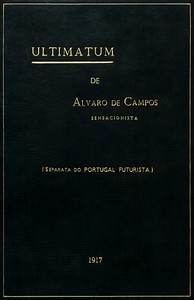
Ultimatum
Riassunto
"Ultimatum" by Alvaro de Campos is a provocative manifesto-like text written in the early 20th century, specifically in 1917. The book is a critical and satirical work that expresses disdain for contemporary European society, its politicians, and its cultural figures. It delves into themes of disillusionment, the stagnation of creativity, and a yearning for a new, innovative world order. In "Ultimatum," Alvaro de Campos, a heteronym of Portuguese poet Fernando Pessoa, launches a fierce tirade against a host of prominent figures, accusing them of contributing to the moral and intellectual decay of Europe. The text adopts a passionate and energetic tone as it declares a "fallência geral," or general failure, of civilization, suggesting that society's ills stem from a profound disconnect between human sensitivity and the stimuli of modern life. Campos calls for an "artificial adaptation" to revive creativity, proposing radical changes in political, artistic, and philosophical paradigms. Ultimately, he envisions a future led by "Supermen" who embody completeness, complexity, and harmony, pushing for a reinvention of societal values and structures amidst the chaos of World War I. (This is an automatically generated summary.)
Diritti e provenienza
Public domain in the USA.
Distribuzione nell’UE non verificata
Argomenti (3)
- Category: Essays, Letters & Speeches
- PQ
- Portuguese literature -- 20th century