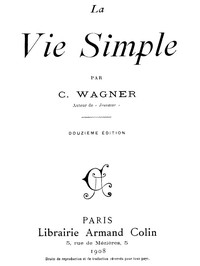
La vie simple
Riassunto
"La Vie Simple" by Charles Wagner is a philosophical work written in the early 20th century. The text explores the concept of simplicity as a response to the complexities of modern life, emphasizing the importance of focusing on essential values over materialistic distractions. It encourages readers to aspire to a simple way of living that cultivates happiness, moral integrity, and deeper human connections. The opening of the text sets the stage for Wagner's discourse by reflecting on the chaotic lives of the Blanchard family as they prepare for a wedding, illustrating how modern societal conventions can overwhelm personal connections and fulfillment. Amidst the upheaval, the character of the grandmother stands out as a voice of reason, advocating for the significance of pausing to appreciate what truly matters—love and companionship—over the superficial demands of social obligations. Wagner uses this domestic scene to introduce his argument about seeking a simpler life as a remedy to the complicated nature of contemporary existence, suggesting that many suffer from the consequences of living in a world that prioritizes material demands over meaningful relationships. (This is an automatically generated summary.)
Diritti e provenienza
Public domain in the USA.
Distribuzione nell’UE non verificata
Argomenti (5)
- Category: Philosophy & Ethics
- BJ
- Conduct of life
- FR Philosophie, Religion et Morale
- Simplicity