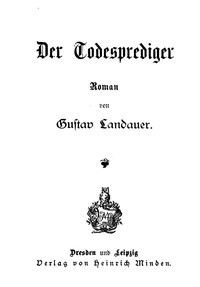
Der Todesprediger
Résumé
"Der Todesprediger" by Gustav Landauer is a novel written in the late 19th century. The story chronicles the life of Karl Starkblom, the second son of a shoemaker, as he navigates a world steeped in philosophical disillusionment, personal loss, and existential questioning. The narrative explores profound themes, including individual purpose, societal duty, and the search for meaning in a life marked by both promise and despair. The opening of the novel introduces readers to the philosophical underpinnings that will shape the protagonist's journey. Karl Starkblom is presented as a deeply introspective character, who reflects on his tumultuous childhood and his family's decline, particularly focusing on the shortcomings of his father. As he transitions into adulthood, Karl grapples with the tensions between his early aspirations for a philosophical life and the practical demands of a legal career. The narrative highlights his internal struggles, questioning societal norms and the worth of human existence amidst personal tragedies. It sets the stage for his eventual awakening and desire to engage more deeply with the world around him, questioning life's greater meaning and his role within it. (This is an automatically generated summary.)
Droits et provenance
Public domain in the USA.
Distribution dans l’UE non vérifiée
Sujets (4)
- Category: Novels
- Category: German Literature
- PT
- German fiction -- 19th century

