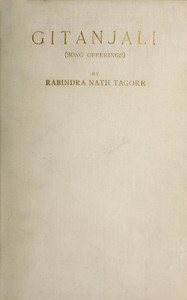
De Hoovenier
Summary
"De Hoovenier" by Rabindranath Tagore is a poetic work written in the early 20th century. The text delves into themes of love, longing, and the beauty of nature, presenting a rich tapestry of emotions through its characters and lyrical style. The central figures include a devoted servant who wishes to tend to the queen's garden and a poet who contemplates the mysteries of existence, reflecting the depth of human connection and desire. At the start of the narrative, we are introduced to the dynamic between the servant and the queen, where the servant expresses his desire to become the gardener in her flower garden, forsaking his previous duties. The queen is initially taken aback by this request but ultimately agrees, symbolizing a shift toward a simpler, more intimate form of service and love. The opening portion sets the stage not only for the servant's devotion but also for the poignant introspections of the poet, who contemplates the relationship between life, love, and mortality, inviting readers to explore a world where emotions and nature intertwine beautifully. (This is an automatically generated summary.)
Rights & provenance
Public domain in the USA.
EU distribution not verified
Subjects (6)
- Category: Poetry
- Nobel Prizes in Literature
- PK
- Tagore, Rabindranath, 1861-1941 -- Translations into Dutch
- Bengali poetry -- Translations into Dutch
- Indic poetry -- Translations into Dutch