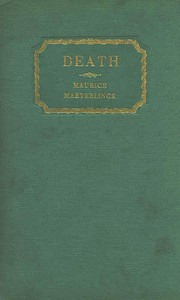
Death
Summary
"Death" by Maurice Maeterlinck is a philosophical treatise written in the early 20th century. It explores the complex concept of death, interrogating the fears and misunderstandings surrounding it, and prompting readers to reevaluate their perceptions of mortality and the afterlife. Maeterlinck invites a deeper contemplation of death, urging an understanding of it beyond common fears and societal norms. In this book, Maeterlinck argues that the agony associated with death arises not from death itself but from the prolonged suffering of life and the attitudes society holds towards its end. He critiques the medical and religious practices that prolong suffering and instill fear of the unknown after death. Throughout the chapters, he presents various philosophical perspectives on consciousness, survival, and the nature of infinity, ultimately suggesting that death should be viewed as a natural transition rather than a terrifying end. The work illuminates the misconceptions of death, advocating for a more enlightened and peaceful acceptance of this inevitable aspect of human existence. (This is an automatically generated summary.)
Rights & provenance
Public domain in the USA.
EU distribution not verified
Subjects (5)
- Category: Philosophy & Ethics
- Category: Religion/Spirituality
- Nobel Prizes in Literature
- BD
- Death